Multi-site & growing SMEs
ERP for several sites, with one shared master data
For companies with a central warehouse, branches or several entities. Items, customers and prices exist once, stock is visible per warehouse and location. Every branch has its register, every entity its own ledger if needed. The AI Steward balances stock between sites.
Where growth across sites slows down
Every site has its own list
Items, prices and customers are maintained several times and drift apart.
Stock in the wrong place
One branch is empty while the goods sit in the central warehouse. New stock is ordered anyway.
Registers without a link
Day-end closings arrive as paper or files and are booked afterwards.
Several entities, several programs
Each entity has its own accounting and its own login.
How several sites work in relyd
The screenshots are taken from relyd, filled with sample data of a bike retailer with a central warehouse and three branches.
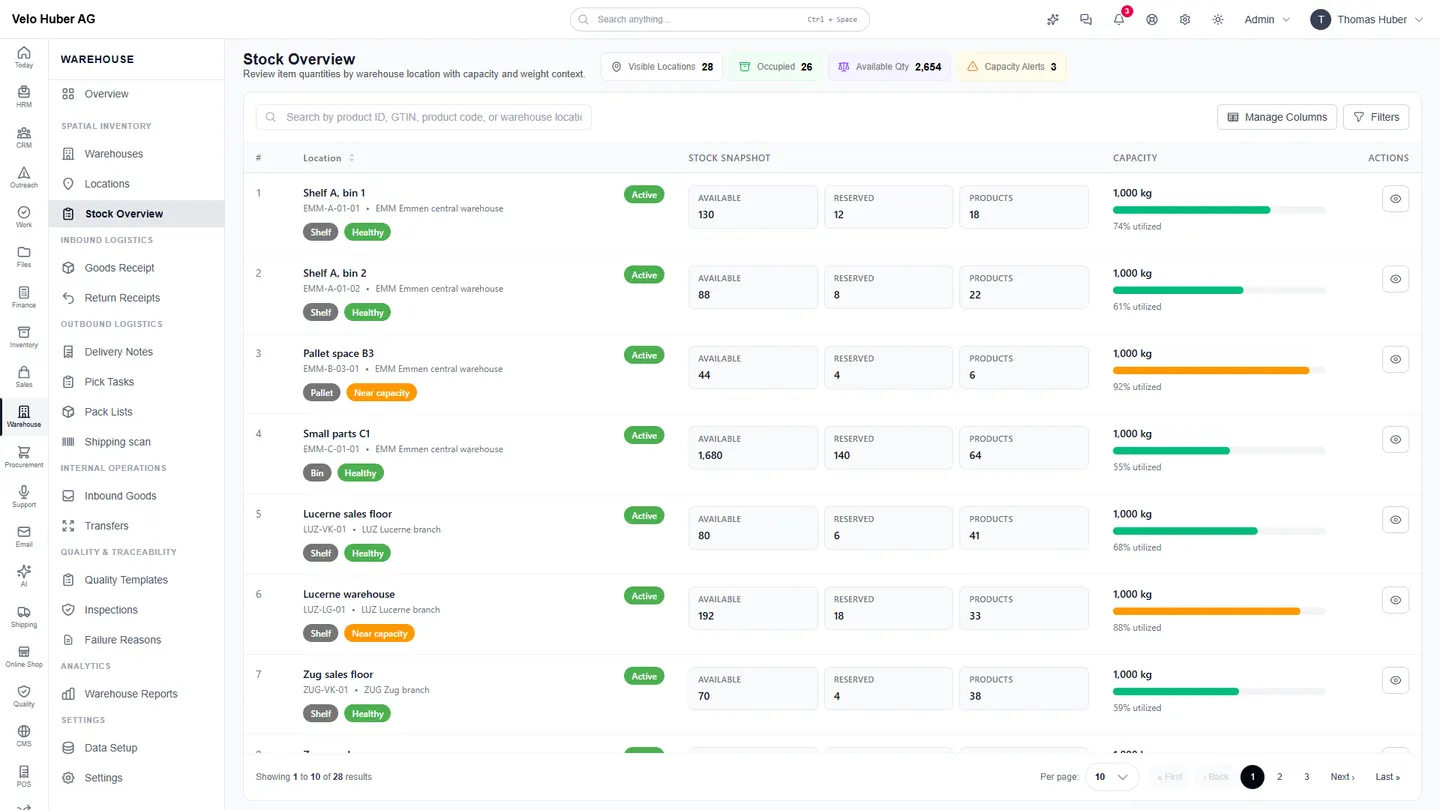
Stock across all sites
The stock overview shows every location with available and reserved quantity, number of items and utilisation, from the central warehouse to the shop floor.
- Several warehouses with locations and bins
- Transfers between sites
- Allocation rules decide the shipping warehouse
- Stock counts and differences per site
A register per branch, a ledger per entity
Every branch sells at its register from the shared stock. Day-end closings flow straight into finance. Several entities keep separate ledgers in the same account.
- Register with cash journal and day-end closing
- Several ledgers with their own currency and QR-IBAN
- One master data for items, customers and prices
- Roles and permissions per person and module
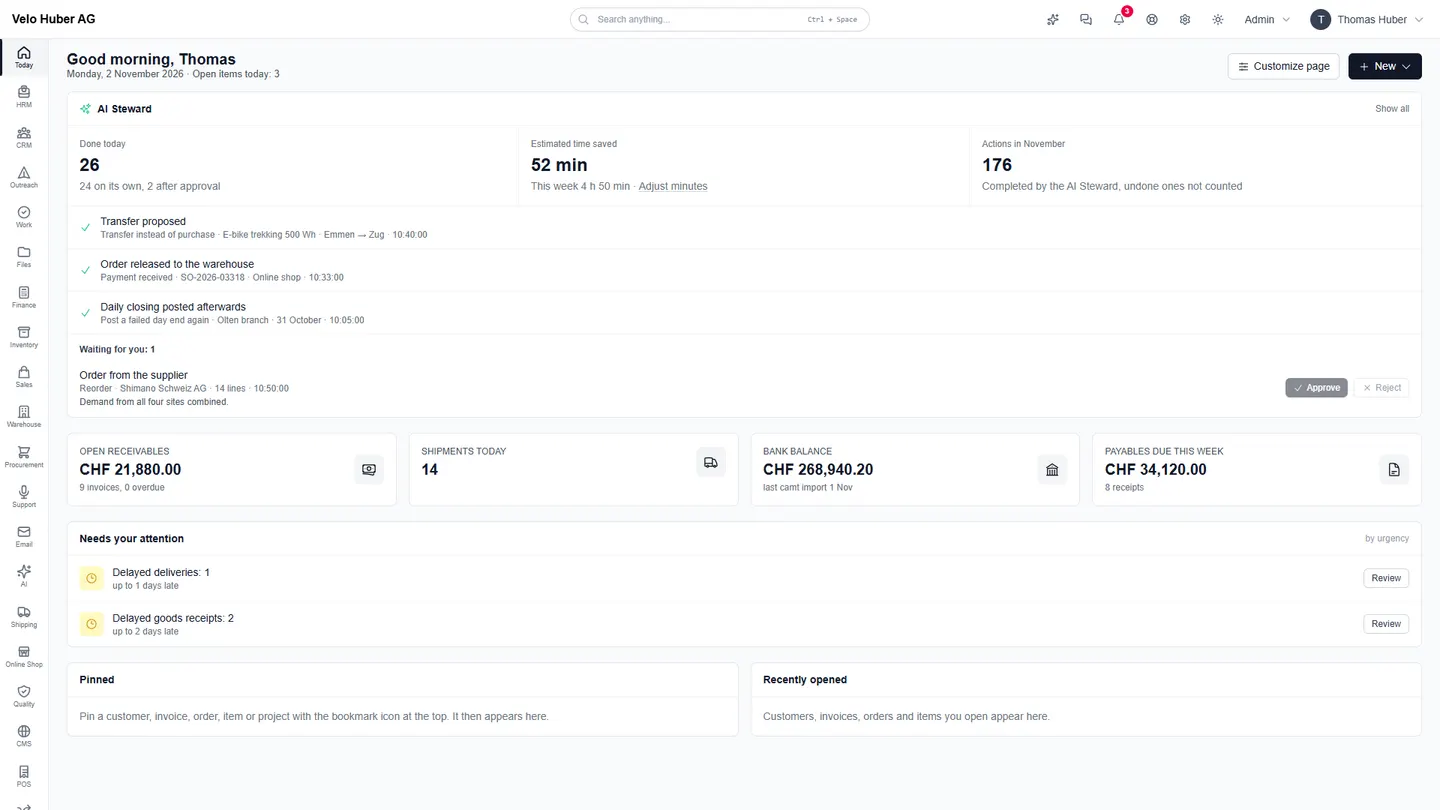
The day starts with balancing
The start page “Today” shows what the AI Steward handled: transfer instead of purchase, orders released to the shipping warehouse, day-end closings booked.
- Transfer proposed before ordering new stock
- Orders released to the right warehouse
- Register closings booked into finance
- Combined purchase orders across all sites
What the AI Steward takes over across sites
Every workflow starts manually or with your approval and only runs on its own once it has proven itself. Every step is logged.
Transfer instead of purchase
When one warehouse runs short and another has enough, proposes a transfer; otherwise a purchase suggestion.
Stock shortage on an order
When stock cannot be reserved in full, proposes a transfer from another warehouse, a partial delivery or honest customer information.
Reorder
Proposes a draft purchase suggestion for active products at or below their reorder level.
Post a failed day end again
Finds day ends that could not be posted to finance and posts them again after approval or creates a task.
Clear up a cash difference at closing
Finds register closings with a difference at or above the tolerance and proposes a task with expected and counted cash and earlier closings.
Stock difference
Looks for patterns in booked count differences and proposes a recount of the largest ones.
Modules for several sites
Frequently asked questions
- How many warehouses and branches are possible?
- As many as you need. Every warehouse has its own locations; stock is visible per site and in total.
- Can every entity have its own ledger?
- Yes. Several ledgers with their own currency, payment details and QR-IBAN run in the same relyd account.
- Do the branches sell from the same stock?
- Yes. Each branch register books to its warehouse, transfers balance between sites.
- What does another site cost?
- You pay per user. Additional warehouses and branches cost nothing extra.
- Where is the data stored?
- The data is stored in European data centres.
Test relyd with your sites
14 days free, no credit card. In a demo we show relyd on your own process.